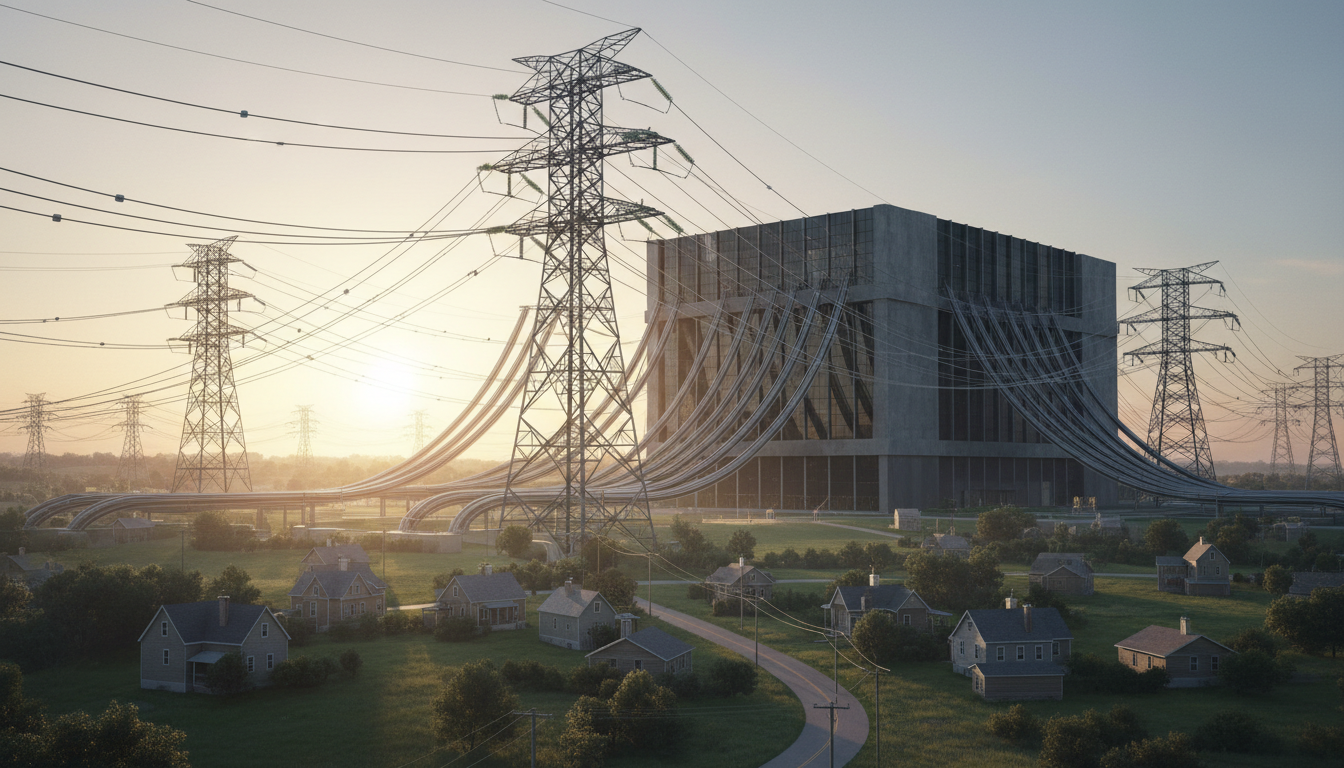
Key takeaways
- The introduced proposal would protect other electricity customers from certain new data-center costs.
- It would also narrow the route for challenging environmental reviews in court.
- Faster decisions deserve support when accountability and fair cost allocation survive the bargain.
The Senate’s Bipartisan American Affordability and Jobs Act of 2026 offers a useful test of practical politics: can Washington make infrastructure decisions faster without making households absorb costs or communities lose meaningful recourse?
This commentary examines the introduced September 30 text of S. 5653. Its provisions are proposals, not protections already in force. The judgment below concerns that text, rather than a claim that Congress has passed it.
A consumer protection worth keeping
Section 2107 would bar shifting incremental costs of covered computing loads onto other customers, subject to its stated jurisdictional limits. The covered-load definition starts at 20 megawatts and includes facilities reasonably expected to reach that level at full buildout.
The text also requires financial assurances before necessary facilities or upgrades are built. Cost recovery would continue if a covered customer exits before paying its full incremental cost. Existing arrangements approved before enactment would remain in effect.
That is a sensible starting principle: households should not become the default backstop for someone else’s expansion. Legislators should preserve those protections and explain the limits plainly.
The other side of the bargain
Section 1110 would generally require environmental-review challenges within 150 days, unless a shorter federal deadline applies. It would impose participation and injury requirements and place those cases directly in federal appeals courts.
For violations of the National Environmental Policy Act, the proposed remedy generally sends the authorization back for correction while leaving it in force. The text provides limited preliminary-injunction exceptions involving other federal laws. Those details matter to anyone weighing speed against the ability to stop harmful work.
| Provision | Proposed change | Public-interest question |
|---|---|---|
| Section 2107 | Cost protections for covered computing loads | Who remains exposed under existing arrangements? |
| Section 1110 | Tighter challenges and narrower remedies | Can affected communities obtain effective relief? |
| Section 1401 | Limits on agency interference with permitted projects, with exceptions | Are predictable permits paired with workable safeguards? |
Faster decisions are useful only if the public can trust both the bill and the bill-payer.
That is our editorial judgment, not a quotation from a public official. A broad governing majority should insist on clear cost rules, predictable decisions and an honest account of what legal protections change. A bipartisan label is a reason to examine the bargain—not a substitute for doing so.